Jodi-Lynne Hill is a life-long educator who, after 30 years of urban city living, decided to move to her ancestral home in the remote, water-access only First Nations community of Gitga’at (Hartley Bay). When she was then diagnosed with cardiomyopathy, it wasn’t clear at first how she would be able to interact with the healthcare system to receive the cardiovascular care she would require.
Earlier this year, Jodi-Lynne was noted to have a murmur. She waited anxiously in Gitga’at to hear about when she would be able to have an echocardiogram performed in Terrace, a trip requiring a 3-hour ferry and 1.5 hour drive each way, with ferry services only available a few days per week.
When Dr. Keegan Marchand, a General Internal Medicine fellow and member of the Syilx Okanagan First Nation, visited Gitga’at through a newly developed in-reach program, Jodi-Lynne’s life was changed. Dr. Marchand shared with Jodi-Lynne that she would require several advanced tests to determine the cause of her newly diagnosed cardiomyopathy; tests that are only available in Vancouver. To coordinate these advanced tests in an expedited fashion seemed insurmountable at first, but through the Dilawri Cardiovascular Institute’s Centres for Indigenous Cardiovascular Health, AI, Data Science, and Imaging and Structural Heart Disease, Jodi-Lynne was able to have all her tests completed and return home within 1 week of her initial diagnosis.
Indigenous communities and access to care challenges
Access to clinicians, medications, and diagnostics are fundamental to quality care. However, in many Indigenous communities, even transportation can be incredibly challenging. In her interview, Jodi-Lynne shared about her struggle to access life-saving medications in her community, as well as the extreme logistical coordination it takes to arrange for medical evaluation outside of her community.
Her internist, Dr. Keegan Marchand, recommended that Jodi-Lynne needed an urgent, specialized echocardiogram with intravenous contrast and a coronary angiogram. Fortunately, Dr. Keegan Marchand shares a passion for Indigenous Health with his older brother, Dr. Miles Marchand, who serves as the Director of the Centre for Indigenous Cardiovascular Health for DCI. Through the Centre, Dr. Marchand was able to rapidly coordinate life-saving care for Jodi-Lynne with two other DCI Centres. These three Centres worked together to ensure Jodi-Lynne’s patient journey was streamlined, coordinated, culturally safe, and compassionate.
Life-changing coordination of care
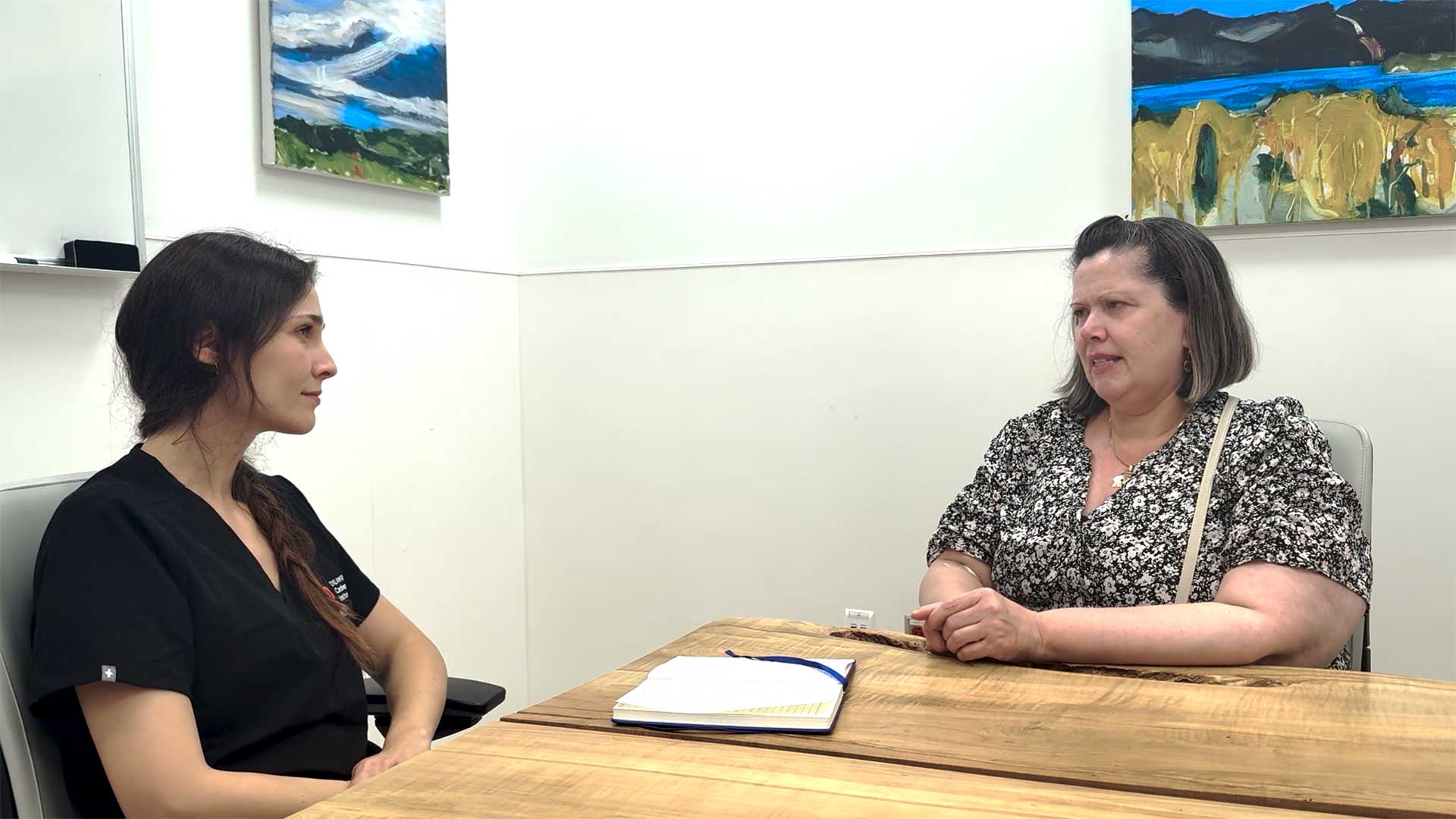
Jodi-Lynne was asked how she felt about the coordination and communication that took place for her to be treated at DCI: “they did amazingly well. I don’t know anybody else in my family or from my village that gets this kind of service so quickly.” When asked about what that type of care in planning meant to her, she responded, “I think it’s gonna mean my life to be here.” Reflecting on how fortunate and quickly she was able to receive care, Jodi-Lynne noted that her experience was not representative of what others in her community have experienced in the past. Access is more than scheduling; additional challenges include weather conditions, travel arrangements, family obligations, and the removal from community.
At DCI, it’s essential for patient care to reflect individual patient narratives, belief-systems, and goals . When Jodi-Lynne was asked whether she felt that she had adequate opportunities to participate in decision-making about her care, she responded: “With the people who are working with me right now, yes, I think I do. […] I don’t expect myself to know about all the medical things, not just what’s happening now, but the whole picture of me, so I put that trust into [the team]. I think I’ve been given a lot of ways to make input.”
Breaking silos to improve access and quality of care
While there are many opportunities to enhance access and comprehensive care at all points of the patient journey, Jodi-Lynne reiterated the importance and power of first, understanding the challenges faced by Indigenous communities.
Jodi-Lynne described how a family member had received care from a clinician who had first-hand experience of visiting her remote community not once, but twice. This led to the clinician being able to make recommendations for follow-up care that truly reflected the realities of living there. She then went on to speak about the importance of education and awareness around cardiovascular health, particularly for future generations.
Next steps: continuing to expand patient access to care
When asked about how the healthcare system can better respond to the needs of Indigenous patients, particularly those living in rural and remote settings, Jodi-Lynne’s response was simple: “Just coming in and wanting to learn—purely coming in, I think, would be helpful.”
DCI is committed to reconciliation with Indigenous peoples and collaboratively working towards a future where all Indigenous communities can receive the cardiovascular care they deserve. To learn more, including new and ongoing initiatives designed to bring culturally appropriate cardiac care to Indigenous communities, please click to learn more about the Centre for Indigenous Cardiovascular Health.